


Here to help
Award Winning Support
We have a wide variety of support and safeguarding services that are available for all our learners, whether you are here full-time, one day a week or even just for a few hours each week, you’ll have access to all our support and safeguarding services.
Contact us:
- Find us upstairs in The Hwb
- Monday to Friday: 08:00 to 17:00


Financial Help
I need help with my finances?
If your financial situation is affecting your ability to study there are several funding opportunities that may be available to you to help. You can find out more on our student finance page.
The course has been cancelled, can I get a refund?
I can no longer do the course, do I get a refund?

Learning Support Needs
At Pembrokeshire College, we take learning support very seriously. As a leading education provider, we aim to maximise the potential of all our learners. Our award-winning learning and wellbeing support helps to raise individual learner performance and supports progression to further learning, voluntary opportunities or employment, while preparing learners for adulthood.
It is very important that, when applying to the College, you let us know what your learning support needs are and upload any relevant evidence, for example your IDP or Diagnostic Report, as early as possible and before your interview.
This ensures that we can put the appropriate support in place before you join the College.
If you have any queries, please email learningsupport@pembrokeshire.ac.uk
Education Wales Guides:
Contact us:
- Find us upstairs in The Haven
- Monday to Friday: 09:00 to 16:30
- learningsupport@pembrokeshire.ac.uk
- 01437 753 304
At school I had a Learning Support Assistant (LSA) can I have one at College?
On applying to the College, we ask that you let us know what your learning support needs are and upload your supporting evidence, for example an IDP or a Diagnostic Report.
Once we have received this, we will contact you to discuss your needs in a person-centred way and ask whether you would like or need learning support in College for some or all of your classes.
We have a large team of Learning Support Assistants (LSAs) who provide classroom and workshop support for learners with learning needs, difficulties or disabilities throughout their time at College.
LSA support can be adapted to suit a learner’s individual needs. Support can vary from one-to-one or shared support to helping with assignments, adapting resources, making notes, time management, organisational skills and developing digital literacy, numeracy and literacy skills.
All LSAs are trained to encourage learners to develop their independence skills, helping to prepare them for adulthood.
The LSA team also provides personal support to assist with day-to-day activities. Learners with mobility, medical or general care needs will be supported with dignity and respect in a person-centred way.
For some learners, LSAs will provide support during breaks and lunch periods, as well as when travelling to and from their transport.
If you have any queries, please email learningsupport@pembrokeshire.ac.uk
What assistive technologies are available?
At Pembrokeshire College, we are here to help every learner succeed and that includes providing support with assistive technology to make learning more accessible.
We offer a range of tools and technology designed to support your learning and independence and help you get the most out of your course. This includes:
- Access to Office 365, with built-in accessibility features like Dictate, Immersive Reader and translation tools
- Reader pens to help with reading and understanding text
- The Microsoft Lens app for capturing and converting notes and documents
- Magnifiers for easier on-screen reading
- Laptop loans to support your studies at home or in college
- Goblin.tools free AI software designed to support neurodivergent young people to prioritise tasks and understand information and communications
If you think assistive technology could help you with your learning, we are here to chat and find the right tools for you.
Can I get support if I am hearing impaired?
Yes, we have Communication Support Workers (CSWs) who can provide one-to-one support in a person-centred way. They can adapt or modify resources, make notes in class, help with assignments and support learners around the College environment.
All CSWs are trained to encourage learners to develop their independence skills, helping to prepare them for adulthood.
If you would like to discuss support for a hearing-impaired learner, please email learningsupport@pembrokeshire.ac.uk
Can I get support if I am visually impaired?
Yes, we have Communication Support Workers (CSWs) who can provide one-to-one support in a person-centred way. They can adapt or modify resources, make notes in class, help with assignments and support learners around the College environment.
All CSWs are trained to encourage learners to develop their independence skills, helping to prepare them for adulthood.
If you would like to discuss support for a visually impaired learner, please email learningsupport@pembrokeshire.ac.uk
I struggle with my reading, can you help?
Learners who experience difficulties with reading, decoding, spelling or phonics, including those with dyslexia or autism, may be referred for Toe by Toe reading intervention with a member of the LSA team.
The programme is designed to help anyone who finds reading difficult, whatever the reason. Coaching sessions take place during learners’ break times, so they do not impact on their course of study.
For more information, visit the Toe by Toe website.
Is there assisted travel available?
If you have an Additional Learning Need (ALN) which affects your ability to access mainstream transport, please refer to our Special Transport Guidance.
Special Transport is discretionary and subject to an application process. There are specific eligibility criteria that must be met before support can be approved.
For an application form, guidance or further information, please email learningsupport@pembrokeshire.ac.uk or contact your Local Authority Transport Section.
What are Exam Access Arrangements and why might I need them?
A Specialist Assessor provides diagnostic assessments for Exam Access Arrangements (EAAs). These assessments help identify reasonable adjustments for learners with disabilities or Additional Learning Needs, in accordance with the Equality Act 2010.
Exam Access Arrangements are designed to ensure learners have a fair opportunity to demonstrate their knowledge and skills in timed assessments and examinations, without changing what the assessment is designed to test.
This may include extra time, a reader, a scribe or a prompt.
All EAAs are governed by the Joint Council for Qualifications (JCQ) regulations.
Joint Council for Qualifications Guidance (external website)
Can you provide help transitioning to College from School?
We know that moving from school to college can feel exciting but it can also be a bit overwhelming. That is why our Learner Transition Team are here to help make your transition as smooth and stress-free as possible for both you and your parents, carers or guardians.
Here is how we support you through your transition:
- Attendance at school Person Centred Plan (PCP) or Individual Development Plan (IDP) Review meetings. The Learner Transition Team at Pembrokeshire College actively participates in school PCP meetings. By attending these meetings, the transition team gains valuable insight into the learner’s strengths, needs and support requirements. This collaborative approach helps to align support strategies between the school and the college, ensuring a seamless transition.
- Where you have evidenced needs, we will meet you to determine if you will need Additional Learning Provision and will therefore need an IDP or if your needs can be met via our Universal Learning Provision (ULP) when a One Page Profile Plus will be created for you. These documents outline your support needs and the best strategies to help you learn.
- College Visits – individual or school groups. The Learner Transition Team supports individuals and schools by arranging bespoke visits to the College, helping learners become familiar with the environment, staff, available learning, pastoral and wellbeing support. These visits are designed to ease the transition process, reduce anxiety, and ensure that learners feel confident and prepared for their next steps in education.
If you need some extra support during open events we can arrange personalised visits or guided tours to help you feel more comfortable about getting to know the College.
Can you help when leaving College?
The Learner Transition Team plays a key role in supporting learners with learning needs as they plan their next steps after completing their course.
By working closely with learners, the team helps identify suitable progression routes, whether that involves further education, vocational training, work experience or employment.
The team works closely with organisations such as Careers Wales, Pembrokeshire Supported Employment Network, Mencap, FRAME, voluntary organisations and other training providers.
If you would like support with planning your next steps after College, please email learningsupport@pembrokeshire.ac.uk
What is the Individual Development Plan (IDP) process?
Learners may join the College with an existing Individual Development Plan (IDP), or specific learning needs may be identified during their programme of study, which could lead to an IDP being created.
For an IDP to be created or maintained, a learner must have an Additional Learning Need (ALN) as defined by the Additional Learning Needs and Education Tribunal (Wales) Act 2018. This is a learning difficulty or disability, arising from a medical condition or otherwise, which is significantly greater than that of their peers and requires Additional Learning Provision (ALP).
Additional Learning Provision may include access to shared LSA support, specialist interventions, communication support, structured programmes or targeted support beyond universal provision.
You can decide whether you would like to give consent for an IDP to be prepared and maintained while you are attending College, and whether your parent or carer is included in the decision-making process. We have listed some of the advantages and disadvantages of giving consent for an IDP below.
The IDP process is designed to ensure that learners with Additional Learning Needs receive the right Additional Learning Provision throughout their studies. The process begins by gathering information about a learner’s strengths, challenges and support needs.
Your IDP is then created during a person-centred meeting, where your Additional Learning Provision will be discussed and explained to you.
Your IDP will be reviewed every 12 months to ensure the support provided continues to meet your needs.
Advantages and disadvantages of giving consent for an IDP
Parent or carer involved in decision making
Advantages
- Your parent or carer knows you well and can help explain the support you may need.
- They can support you during the decision-making process.
- They may provide a different perspective that helps you consider all your options.
Things to consider
- Your parent or carer may have different views about the support you need.
- It may be more difficult to express your own views in front of them.
Parent or carer not involved in decision making
Advantages
- You have greater ownership of decisions about your learning.
- You can make choices independently.
Things to consider
- Your parent or carer may feel excluded from decisions.
- You may miss out on their advice and support.
Giving consent for an IDP and Additional Learning Provision (ALP)
Advantages
- You can access additional support.
- You can discuss changes to your support if your needs change.
- You can review your support regularly.
Things to consider
- You will be invited to annual reviews.
- The College will collect and maintain information about your support needs.
Not giving consent for an IDP
Advantages
- You can decide when to disclose information about your support needs.
- Staff can still provide some general support and guidance.
Things to consider
- There may be delays in accessing support.
- Some specialist support may not be available.
- You will not have an annual IDP review.
- College staff may not be fully aware of your support needs.
Not sharing information with the College
Advantages
- You decide what information you share and when.
Things to consider
- The College may not be aware of your support needs.
- You may not receive the support that would help you succeed.
- It may be more difficult to achieve your goals without appropriate support.
If you would like to discuss your IDP or find out whether you may be eligible for one, please email learningsupport@pembrokeshire.ac.uk
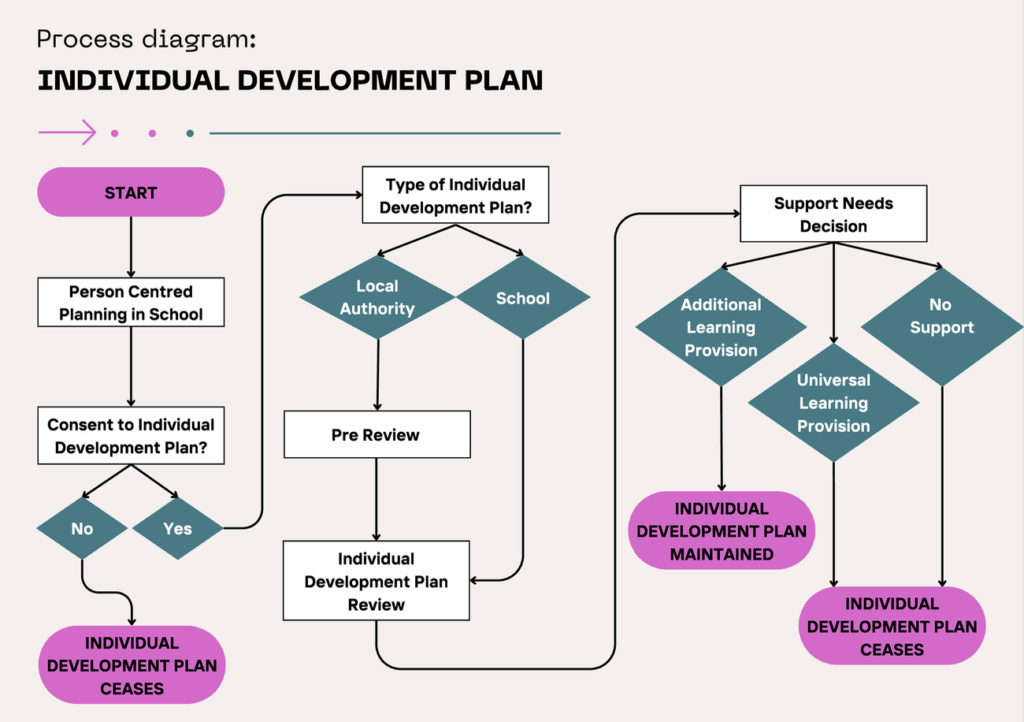
What if I am not happy with a decision about my IDP?
If you have any queries or concerns about the College’s decision regarding your IDP or the Additional Learning Provision (ALP) provided, please contact the College’s Additional Learning Needs Co-ordinator (ALNCo) at s.thompson@pembrokeshire.ac.uk
If you have an IDP, you have the right to appeal to the Education Tribunal for Wales if you do not agree with the College’s decision.
What if I do not want a Learning Support Assistant in class or do not qualify for an IDP?
If you have provided evidence of your learning needs, but do not have an IDP, we can create a College One Page Profile Plus (OPP+) document. This outlines your learning needs and how you would like to be supported (or not) in class, and can be shared with your tutors and support staff.
If you would like to discuss creating or updating an OPP+, please email learningsupport@pembrokeshire.ac.uk
The Team
Contact us

Safeguarding & Support
We are an Encompass College and take the safeguarding of all our learners seriously.
Contact us:
- Maxine Thomas - Designated Senior Person Safeguarding & Wellbeing
- 079 8943 0703
- Orlaith Brennen - Deputy Senior Person Safeguarding & Wellbeing
- 01437 753 186
- 078 1354 6695
- safe@pembrokeshire.ac.uk

Will I be treated equally?
We are proud to offer a welcoming, inclusive and supportive environment for all our learners. Everyone is treated with respect and valued equally. We are here to help you thrive, reach your potential and for you to feel safe and supported.
We have a zero-tolerance approach to discrimination of any kind. We fully support the rights of our learners under the Equality Act 2010. Our staff receive regular Equality, Diversity and Inclusion training, and we encourage learners and staff to speak up and report any concerns to our Safeguarding Team. Any reports of discrimination, harassment or victimisation are always taken seriously and thoroughly investigated.
Pembrokeshire College is an anti-racist organisation. We are committed to anti-racist values and have a robust Anti-Racism Action Plan in place to help us keep moving forward. We also respect and support religious and cultural diversity – a multi-faith prayer room is available for all learners and staff on our main campus.
The College’s Learner Executive have an active Learner Equality and Diversity Committee and a team of ‘Safeguardians’ who are committed to supporting learners and promoting allyship. The committee hold events raising awareness of the lived experiences and barriers facing young people and ensuring all learners are made to feel welcome.
Is there support for work-based learners?
If you are on a Jobs Growth Wales + (JGW+) course or an apprenticeship, we offer high-quality teaching, learning and assessment that works for everyone. We believe in a person centred approach, which means we focus on what you may need to succeed.
We offer support to all learners. If you need a bit of extra help, whether it’s something targeted or more personalised, we have got a range of academic, learning, pastoral or wellbeing services to support you. It could be access to a laptop or Exam Access Arrangements.
When you enrol, we will ask you to let us know if you have any learning support needs. Then we will arrange a time to chat about the best way we can support you.
And don’t worry if your needs or wishes change while you are studying, we are always here to listen and adjust your support.
What if I'm struggling to get my assignments done?
If you’re struggling with the workload, this first thing is to speak to your tutor to let them know.
The next thing is to find your Learning Coach in The Hwb – they will be able to help you to make a plan and to get back on top of your workload.
Every learner in College has access to a dedicated Learning Coach to aid the academic transition from school to College. One of the main aims of the team is to encourage the development of independent learning skills; which will enable learners to achieve their academic goals.
Learning Coaches will work with learners to help them develop the necessary skills to enable them to become independent learners. They can arrange 1-1 or group sessions, tailor-made to the individual’s needs.
Sessions may include:
- Organisation
- Assignment work
- Revision techniques
- Study skills
- Motivation
Do you have a Student Union?
We don’t have a Student Union on campus but students are able to apply for an NUS card for discounts in some stores.
We also have an active Learner Voice programme and you will be encouraged to become a Course Representative or to even stand for Student Governor to ensure that the views of learners are heard.
I'm currently in care, is there someone I can speak to?
The College is proud to be delivering the Reaching Wider project, giving looked after learners additional support to progress on their course and have the opportunity to attend Higher Education taster sessions.
Órlaith, is part of our Safeguarding Team and dedicated to the support and wellbeing of our looked after learners and care leavers. Órlaith is based in The Wellbeing Hub. Her phone number is: 01437 753 186, email safe@pembrokeshire.ac.uk
I'm estranged from my parents, is there someone I can speak to?
Pembrokeshire College has a designated officer, Judith Evans, as part of our Safeguarding Team she can provide advice and support to learners who are estranged from their parents. This can be regarding their current studies and also for progression to further studies at Pembrokeshire College or going to University.
Judith is based in The Hwb (up the stairs in the atrium). Her phone number is: 01437 753186, email safe@pembrokeshire.ac.uk
I'm a parent/carer/guardian how can I support my child?
My home language is Welsh, can I study in Welsh?
Pembrokeshire College is committed to developing its bilingual provision and ethos. We promote bilingualism and encourage all our students to develop and use their Welsh language skills.
Bilingual opportunities
Students are welcome to access tutorials in Welsh, to complete assessments or assignments through the medium of Welsh and there are many units that you can study in Welsh or bilingually too.
Studying your vocational course bilingually will help you develop valuable skills for the workplace and will give you a wider range options when you leave College.
Visit our Welsh Language in the College page to find out what is available to you
Need someone to talk to?
Your tutor
If you have any concerns about your studies let them know, if you have any worries about things other than your course, they’ll be able to put you in touch with someone who can help.
Pastoral Coaches
On-hand throughout your study to support you with any issues you may be facing.
Emotional Literacy Support (ELSA)
We understand that emotional wellbeing is important for academic success. That is why we offer support through our trained Emotional Literacy Support Assistants (ELSAs), who are specially trained to support young people with their emotional development. Their role is to listen, understand and help you find your own solutions to the challenges you might be facing.
Guidance Team
Our Advice and Guidance Team can support you with your progression, whether you need help with identifying your ambitions, knowing how to get to where you want to be, or simply researching your options. Our friendly advisors are here to help you. Pop in and visit them in the Admissions Office or drop them an email: admissions@pembrokeshire.ac.uk
Chaplain
We have a non-denomination chaplain who attends the College once a week.
Counselling
The College provides a free and confidential counselling service to both learners and staff. The counselling team will help you to explore your thoughts, feelings and worries and to consider your options so that you can make the decisions that are best for you.
You can make an appointment to see a member of the counselling team by calling or by emailing counselling@pembrokeshire.ac.uk
Youth Worker
Our Youth Worker is on hand to help signpost learners who are having difficulties with any aspect of their studies or life in general.
Are there quiet spaces in College?
I care for someone, is there extra support for me?
Pembrokeshire College aims to support all its learners and works closely with partner agencies to provide additional support for learners who have carer responsibilities.
The College is proud to be working with Investors in Carers and the Driving Change project in partnership with the Carers Federation and the Learning and Work Institute. We hold the Investors in Carers bronze award and the Carers Federation Quality Standard for Carer Support.
We offer our Carers:
- A dedicated team that unpaid Carers can turn to for support and signposting, The Safeguarding and Wellbeing Team can be reached by emailing safe@pembrokeshire.ac.uk
- A referral service to register learners as Carers with their GP and with Carer Information Services.
- Resources for Carers – including lists of organisations available to help Carers, information on benefits, health and wellbeing and how to get one-to-one advice and guidance.
- Provide a network for Carers to meet and engage with other learners who are Carers
- If there is a time where the Carer’s responsibility impacts on their studies they can bring it to the attention of the Safeguarding team and the College will consider reasonable adjustments.
- Give priority to Carers for financial support from the Financial Contingency Fund.
- Support a learner Carer to represent other Carers at Learner Voice meetings and to work alongside our Safeguarding and Wellbeing team to keep the needs of Carers at the forefront of learner service provision.
- Arrange events that raise awareness and provide information to Carers such as celebrating Young Carers Day and Carer Awareness Week.
Extra Exam time?
What can I do outside of my studies?
- Arts and Crafts (inc Knitting for Mental Health)
- Board and Card Games
- Clwb Cymraeg
- Drama Club
- Duke of Edinburgh
- Fantasy Games Group (inc Dungeon & Dragons)
- Film Club
- Fitness Activities (Basketball, Circuits, Boccia, Boxercise, Self Defence)
- Gaming Group
- Mental Health Support Groups
- Music Jam meet ups
- OpenLearn with Open University
- Pembrokeshire Orchestra
- Peripatetic Music Lessons
- Pride Group
- Prom Committee
- Safe Space
- Sign Language Lessons
- Sports Academies (Rugby, Football, Netball)
- UCAS Support
Need someone to talk to?
Support and Safeguarding Services
Tutor
Progress Coaches
Cynnydd
Careers Advisors
Wellbeing
togetherall
Welsh Government
Mentor
Advice
Care
Support
Help
Progression
Guidance
Counsellor
Chaplain
youth worker
Your Tutor
If you have any concerns about your studies let your tutor know, it’s important that they know if you are struggling or don’t understand so they offer the right support. If you have any worries about things other than your course, they’ll be able to put you in touch with someone who can help.
Progress Coaches
Each Faculty has dedicated Progress Coaches who you’ll be introduced to during the first few weeks of College. Your Progress Coach will be on-hand throughout your studies to support you with any difficulties or barriers which are preventing you from achieving your full potential. Support includes both appointment and drop-in services, support and advice on wellbeing, relationships, behaviour, attendance, attainment, motivation, confidence building, housing, financial and signposting to other agencies for other support as required, plus regular contact throughout your time in college and during all college holidays.
Careers Advisors
Pembrokeshire College’s Careers & Guidance Advisors can support you with your progression; whether you need help with identifying your ambitions, knowing how to get to where you want to be, or simply researching your options. Our friendly advisors are here to help you. Visit them in the Admissions Office or email them on admissions@pembrokeshire.ac.uk.
Emotional Literacy Support (ELSA)
We understand that emotional wellbeing is important for academic success. That is why we offer support through our trained Emotional Literacy Support Assistants (ELSAs), who can support young people with learning needs to understand their emotional development.
Their role is to listen, understand and help you find your own solutions to the challenges you might be facing.
Visit The Haven, at the top of the stairs in the atrium, or email learningsupport@pembrokeshire.ac.uk
Wellbeing Team
Our Wellbeing Team are here to help you get the most out of your College experience. We have a wide variety of support services including a nurse, counsellors, employment bureau, chaplain, youth worker, TogetherAll (website offering online support 24 hours a day, 365 days a year) plus much more. Visit The Hwb (at the top of the stairs in the atrium) to find out about the support available and how to access it.

Out of Hours
Please see a list of additional support offerings below if required:
Crisis or Emergency
- If you think that either yourself or someone else are going to hurt themselves, call the police or ambulance service 999 or go to your local Accident and Emergency department immediately
- If you or someone you know are at risk from domestic violence, call the police on 999 immediately
Safeguarding
- If you have concerns that someone is in immediate danger telephone the police on 999
- Child Services (social services) Pembrokeshire 01437 764 551, Carmarthenshire 01554 742 322, Ceredigion 01545 574 000
- Out of Hours services Pembrokeshire 0300 333 2222, Carmarthenshire 0300 333 2222, Ceredigion 0300 456 3554
- Adult Safeguarding Pembrokeshire 01437 776 056, Carmarthenshire 0300 333 2222, Ceredigion 01545 574 000
- Childline www.childline.org or call 0800 1111
- Hafan Cymru support for victims of domestic abuse www.hafancymru.co.uk or call Pembrokeshire 01437 768 671, Carmarthenshire & Ceredigion 01267 225 555
Homelessness
- Under 18 – contact child services as listed above or the police
- 18 or over – Pembrokeshire 01437 764 551, Carmarthenshire 01554 899 389, Ceredigion 01970 633 396
- Pembrokeshire (PCS) 0800 783 5001, Carmarthenshire (CTAP) 01554 754 158, Ceredigion 01970 611 832
Food Support
- Pembrokeshire Food Bank 07913 989 624
- Carmarthenshire Food Bank 01267 225 996
- Ceredigion Food Bank 07949 127 307
- Citizens Advice 0808 208 2138
- PATCH Pembrokeshire 0344 477 2020
Keep Warm, Keep Well
Keep Warm Keep Well is a campaign to support people across Pembrokeshire during the cost of living crisis.
The campaign is being led by the Pembrokeshire Community Hub in partnership with Pembrokeshire County Council, Pembrokeshire Association of Voluntary Services and a variety of agencies including Hywel Dda Health Board, Emergency Services and the Voluntary Sector.
Across Pembrokeshire we are once again seeing communities and organisations doing a fantastic job offering a range of local solutions including a warm space, hot meal, activities and access to information & advice. View online some of these Warm Welcome Community Spaces and what they have to offer.
A Winter Warm pack of items is available to people living in cold conditions in Pembrokeshire. The warm packs are part of Pembrokeshire’s programme of support for people struggling with the cost of living.
- The packs will be distributed by West Wales Care & Repair and Ateb staff and volunteers on behalf of Pembrokeshire County Council.
- Each pack contains a range of items to help people keep warm during the cold winter months.
- To ensure these Warm packs reach those who would benefit from them the most, they are available by Referral Only (not self-referral).
- Contact the College Wellbeing Team or Pembrokeshire Community Hub on 01437 723 660 or email enquiries@pembrokeshirecommunityhub.org
Mental Health Support

- Hywel Dda Mental Health Helpline 111 Option 2
- If you need medical support for a mental health condition speak to your GP for advice and a referral to mental health services.
- If you are in crisis, go to your closest Accident and Emergency department.
- Samaritans 116 123 or www.samaritans.org
- Papyrus suicide prevention 0800 068 4141
- Togetherall website www.togetherall.com
- Mind 0300 123 3393 or www.mind.org.uk
- Get The Boys A Lift (GTBAL) email: dropin@gtbal.co.uk
- North Pembrokeshire – The Point Youth Service 01348 871 887
Other Services Available
- Online bullying support www.childnet.com or call 0808 800 2222
- Child Exploitation and Online Protection Centre (police) www.ceop.police.uk
- Meic helpline and live chat service www.meiccymru.org or call 080 880 23456
- Barod drug and alcohol rehabilitation service for over 18s call 03303 639 997
- Choices drug and alcohol rehabilitation for under 18s call 01554 755 779
- Spiritual Support (Mike / Celine) call 0771 779 6994 / 07901 833 523
- Connect Pembrokeshire – if you need any further information on community activities, make connections or support around Pembrokeshire this can be found through Connect Pembrokeshire. This includes a network of warm spaces open around the county.