


City & Guilds Level 3 Diploma in Engineering Fabrication & Welding (2850-32)
Additional information
| Duration: | |
|---|---|
| Mode: | |
| Level: |
This course is aimed at learners who wish to develop advanced skills in fabrication and welding engineering, building on Level 2 qualifications to prepare for higher-level employment or apprenticeships in the engineering sector.
Is this course right for me?
The demand for skilled welders, fabricators and pipefitters continues to grow significantly. Pembrokeshire has seen exciting developments within oil and gas and the growing renewables sector, demonstrating that there will be a significant need for advanced skilled welders, fabricators and pipefitters for many years to come. This Level 3 programme will develop skills and knowledge to a higher standard, enabling learners to take on more complex and demanding engineering roles.
What are the entry requirements?
- There is normally no direct entry to this course, you would need to progress from the successful completion of previous level in this subject area or similar
Current student - what are the entry requirements?
- Successful completion of relevant Level 2 programme (including skills) and decision from progression board meeting
What will I learn?
The course will be made up of the following modules:
- Engineering Principles – Learn how things work and why – get hands-on with technical drawings, basic engineering calculations, and core science, while exploring material properties and quality control.
- Principles of Fabrication & Welding – This unit looks at fabrication materials, joining using non-thermal methods, weld symbols, and common issues like distortion and defects. Dive into testing methods, including both non-destructive (NDT) and destructive techniques.
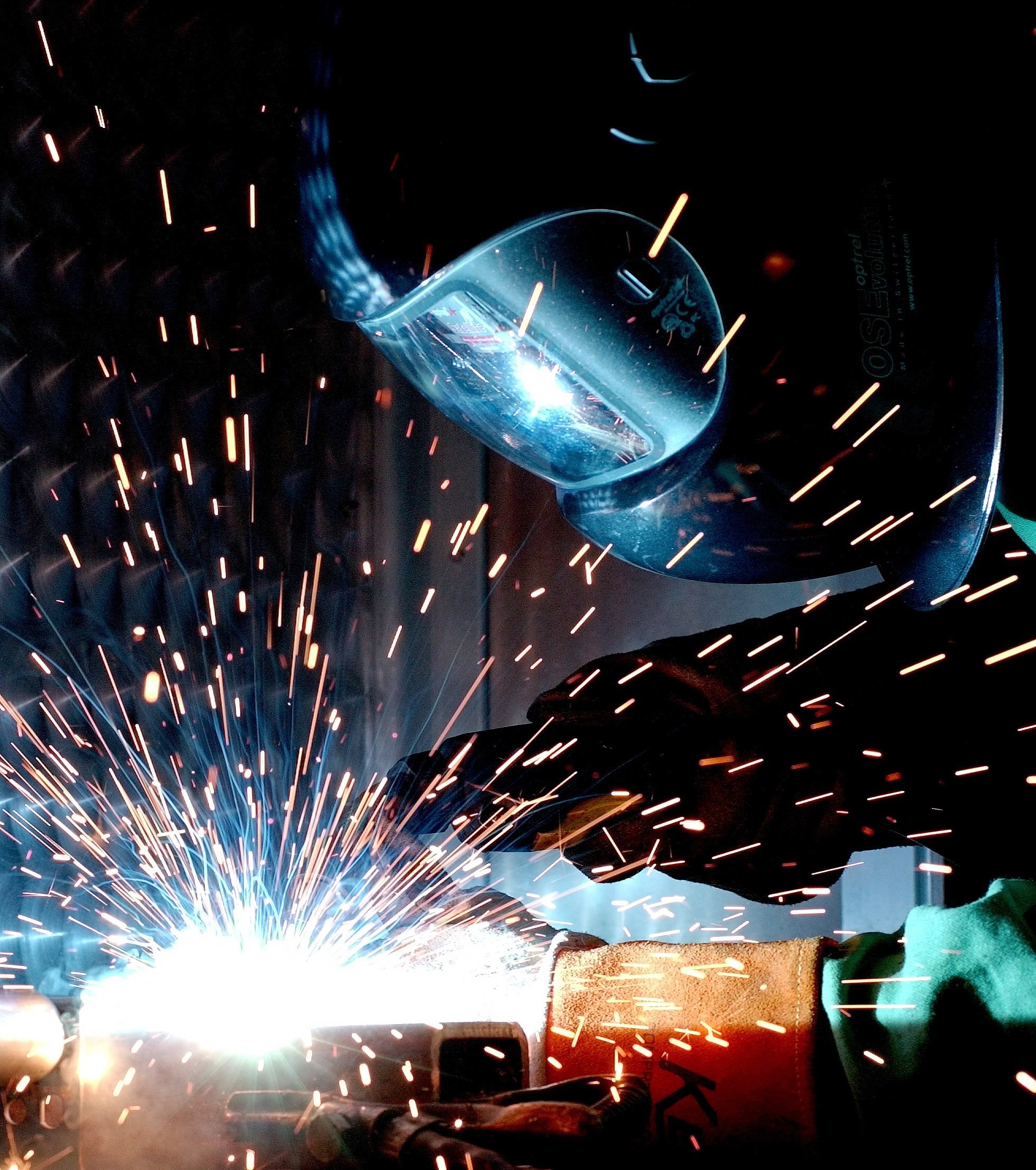
- Manual Metal Arc Welding – Master MMA welding skills across a range of challenging joint configurations compliant to welding procedure specifications. Learn about equipment, consumables, health and safety, and the production and evaluation of welded joints
- MIG Welding – Build advanced MIG welding skills while working on complex joints in multiple positions. Focus on real-world techniques, equipment handling, health and safety, and the production and evaluation of welded joints.
- Platework Fabrication – Learn how to plan, design, and build platework—from simple fabrications to complex structures like pressure vessels and girders. Develop skills in marking out, cutting, forming, and assembling using both bolting and welding techniques.
- Engineering Health & Safety – The essential requirements for working in engineering—from legal regulations and workplace procedures to spotting hazards, managing risks, and handling accident reporting and environmental management.
Will I need to study additional English & Maths skills?
You may need to study an additional skills course depending on:
- the course you are taking at College
- what grades you gained in your GCSE Maths and/or English Language
Below to find out what skills course you may be taking at College.
Work-based, progression pathway programmes within the Built Environment Faculty – you will study Essential Skills Wales (ESW) in Application of Number and Communications.
Jobs Growth Wales (JGW+) programme – will be timetabled into literacy and numeracy sessions. To discuss the opportunity of attending a GCSE resit programme, in addition to their JGW+ timetable, please contact skills@pembrokeshire.ac.uk
Life Skills Academy programmes – you will have opportunities to upskill in English and Maths through Wales Essential Skills Toolkit (WEST) / Century or attending Essential Skills classes.
All other courses and those who have progressed through the internal progression route:
Upskilling Destination Programme – an hour and half session a week developing essential research skills, critical thinking, and academic writing techniques, supporting literacy, numeracy, digital literacy and employability skills
A one year GCSE Resit Programme in GCSE Mathematics Intermediate Tier (Welsh or English medium) / GCSE English Language
A one or two year pre-GCSE upskilling course in required subject/s – The priority of this programme (Foundation Maths for Mathematics pathway) is to build fundamental skill and knowledge, to prepare learners for progression onto the one-year, intermediate tier resit programme.
A one year pre-GCSE upskilling course in mathematics – The priority of this programme is to build fundamental skill and knowledge, to prepare learners for progression to the Foundation Maths programme.
Can I do this course in Welsh?
Learners may have the option to complete course assessment/assignments or elements of the course through the medium of Welsh or bilingually. Visit our Welsh Language in the College page to find out what else is available to you.
How will I be assessed?
- Continuous assessment during the course
- Portfolio of evidence
- Assignment work
- Practical examination
- Online examination
What can I do next?
Successful completion of this course could lead to an advanced welding or fabrication apprenticeship, or direct employment in skilled welding and fabrication roles.
Do I need to bring/buy any equipment?
- Stationery - you will be told about any specific items before you start the course
- Engineering flame retardant coveralls - £35
- Engineering safety boots - £14/£35
- You may be eligible for funding. Find out more on our student finance page
Any costs above are approximate and may change.
Are there any additional costs?
- No tuition fee
- You will need to pay a £100 engineering workshop fee each year before you start the course
- You can rent a locker for £10 per year this will be refunded if the locker remains undamaged and keys are returned
- You may be eligible for funding. Find out more on our student finance page
Any costs above are approximate and may change.